Why we sell vegetables and meat by the kilogram
A tray of six apples is a decision someone else made for you. Four of our eight aisles are priced per kilogram, and this...
Your cart is empty
Start typing in the search field above to see instant search results.
Almost everything people believe about keeping bread is half right. Yes, a loaf dries out. But the thing that makes day-three bread taste like day-three bread is not moisture leaving — it is starch retrogradation, the starch molecules slowly re-forming crystals after the heat of the oven forced them apart. Stale bread is bread whose starch has tidied itself back up.
This is why a slice of three-day-old bread comes back to life in a toaster: heat breaks the crystals again. It is also why the fridge is the worst place in your kitchen for a loaf.
Once you know that, the practical rules stop being folklore and start being physics.
A sourdough is raised on a culture that produces lactic and acetic acid, and that acidity does two useful things: it slows the starch from recrystallising, and it makes the loaf genuinely inhospitable to mould. A rye sourdough gets both effects more strongly than a wheat one, because rye is fermented longer and holds more acid.
That is the whole reason our rye loaf is honestly at its best on day two or three, while a soft white toast loaf is best on the day it is baked. Neither is a defect. They are different products with different jobs.
A plastic bag traps the water evaporating off the crust and puts it straight back into the crust. The crumb stays soft a little longer and the crust goes leathery, then mouldy, roughly two days early. A paper bag lets that water leave, which costs you a bit of crumb softness and buys you a crisp crust and a longer mould-free life. That is why our loaves leave the bakery in paper.
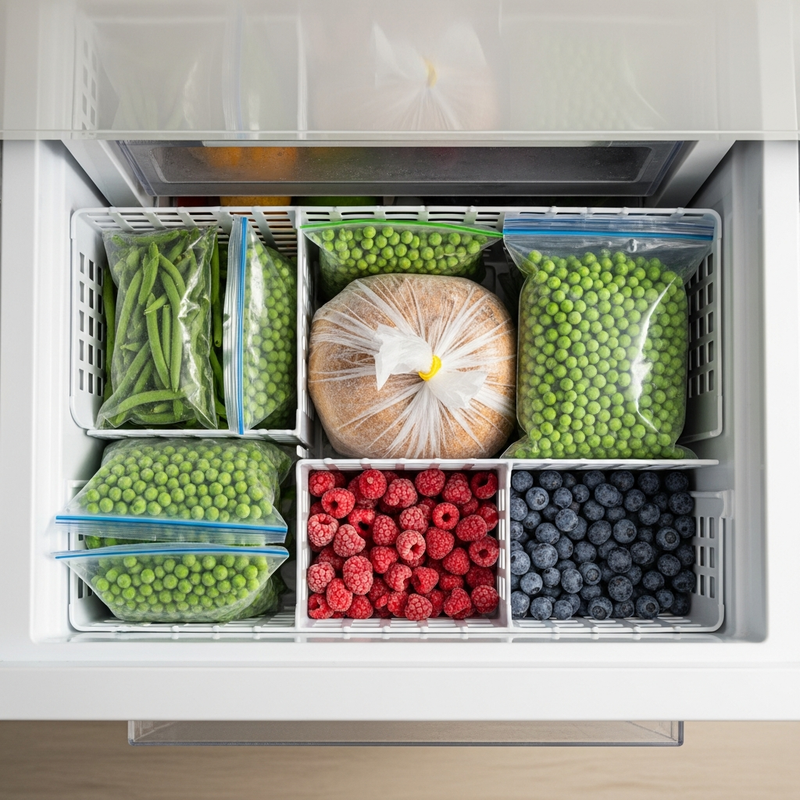
Freezing stops retrogradation dead, and it does it before the staling has happened rather than after. A loaf sliced and frozen on the morning it arrives, then toasted a fortnight later, is closer to fresh bread than a loaf left in a bin for three days. The one thing that matters is slicing it first — a frozen whole loaf is a brick, and thawing it whole means the outside stales while the middle is still cold.
Everything in the bakery aisle is mixed the evening before and baked overnight, so an order placed before 14:00 arrives the day it was baked.
A tray of six apples is a decision someone else made for you. Four of our eight aisles are priced per kilogram, and this...