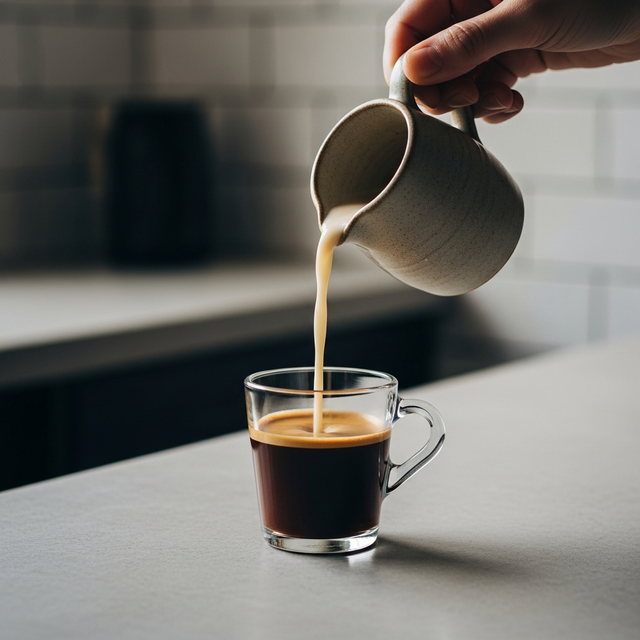
Why some oat drinks split in coffee and others foam
Curdled oat drink is chemistry, not bad luck. Acidity, temperature and one line on the carton explain every flecked cup...
Your cart is empty
Start typing in the search field above to see instant search results.
A chicken breast has almost no intramuscular fat and no connective tissue worth speaking of, which means it has nothing to protect it once the muscle fibres start contracting. Every dry chicken breast anyone has ever eaten was cooked between eight and fifteen degrees too far. That is the whole problem, and it is a measurable one.
Pull it at 68 degrees in the thickest part and rest it for five minutes. Almost everything else in this article is detail around that one sentence.
Poultry is safe when time and temperature together have done the job, not at one magic number — and a breast held at 68 degrees for a couple of minutes is as safe as one blasted to 75 instantly. The difference in the eating is enormous: at 68 the fibres have set but not squeezed, and the juice is still in the meat rather than on the board.
Carryover cooking will take it two to three degrees higher off the heat, which is why you pull early and rest. A cheap probe thermometer is the single best twenty euros in a home kitchen and it pays for itself on the meat counter alone.
A whole breast is wedge-shaped — thick at one end, thin at the other — so by the time the thick end reaches 68 the thin end is at 80 and finished. Lay your hand flat on it and cut horizontally through the thick half, then open it out like a book. Now it is one even thickness and it cooks in one time.
Browning is a chemical reaction between amino acids and sugars, and it needs the surface above about 140 degrees. Water boils at 100, so as long as there is moisture on the meat, the surface cannot get past 100 and nothing browns — it greys, and the pan fills with steam. Ten seconds with a paper towel is the difference between a golden crust and a pale, sad breast.
Breast is cut and weighed to order, so you are not stuck with whatever thickness the tray held. Ask in the order notes and the counter will butterfly it, trim it, or mince it before it is packed — and because it is priced per kilogram you can order 0.5 kg for two people instead of a four-piece tray with two going into the freezer. Fresh poultry is cut the same day it leaves us and travels at 0–4 degrees.
Chicken breast is cut and weighed to your order at the counter, priced per kilogram, with trimming and mincing free on request.
Curdled oat drink is chemistry, not bad luck. Acidity, temperature and one line on the carton explain every flecked cup...